
I’ve been thinking a lot about the things we once tolerated, not necessarily with shame anymore, but with curiosity.
I think most of us have those moments when we look back at a particular time in our lives and wonder, How did I not see that then? Sometimes it is a relationship, sometimes a friendship or a situation we remained in far longer than we now believe we should have, and sometimes it has nothing to do with another person at all. It is simply the way we once related to ourselves and the things we accepted because, at the time, we didn’t understand ourselves in the way that we do now.
We are very quick to give those former versions of ourselves diagnoses in hindsight. We say we had low self-worth, poor boundaries, that we abandoned ourselves or didn’t love ourselves enough, and perhaps sometimes some of that is true. But I have begun wondering whether there is another explanation that deserves a little more compassion.
Sometimes, we simply didn’t know yet.
And I don’t mean that we were foolish or naïve. I mean that there are things about ourselves that we cannot know until life brings us into contact with them. There are boundaries we don’t know we need until something crosses them, parts of ourselves we don’t yet know are precious enough to protect, and ways of being treated that we may not recognise as unacceptable until we have lived through enough to understand why they are.
It is very easy for the woman I am today to look backwards and ask why that woman didn’t know what I know now.
But of course I know now.
I know what happened next.
She didn’t.
There is something about that distinction that has changed the way I look at my own past, because I don’t think most of us consciously set out to abandon ourselves. I think sometimes we have spent so much of our lives directing our tenderness outward that we don’t recognise when generosity has begun costing us something we should never have had to give.
Perhaps you made room because making room was what you knew how to do. You forgave because forgiveness felt like love, and you kept explaining because you genuinely believed that if you could only find the right words, or help somebody understand you properly, something might change. You carried relationships, conversations and emotions long after they became heavy because endurance can look remarkably similar to loyalty when you haven’t yet learned the difference.
I think that is also how attention can be mistaken for intimacy, or sacrifice for love. When we don’t know ourselves deeply enough yet, the line between where we end and another person begins can become terribly unclear, and before long we can find ourselves taking responsibility for things we did not create and trying to repair situations we could never have repaired alone.
That doesn’t mean nobody else bears responsibility.
I think this is important because there is a version of healing language that can sometimes lead us straight back into blaming ourselves, only now we use more sophisticated words to do it. We decide that somebody treated us badly because we didn’t love ourselves enough, or that if we had possessed better boundaries none of it would have happened.
But sometimes somebody did deceive you. Sometimes somebody manipulated you, took advantage of your tenderness or continued receiving from you when they could see what it was costing. Understanding why you remained does not require you to rewrite what somebody else chose to do.
Both things can be true.
You can recognise what another person did and still become curious about the version of yourself who remained there. Not so that you can blame her for it, but so that you can finally understand her.
And I think that understanding changes something.
What happens when you begin to know yourself
There is a point at which self-knowledge begins to settle in a way that feels very different from simply learning the language of boundaries.
I understand why we need scripts and why learning to say no can be important, particularly when we are first discovering that we are allowed to have boundaries at all. But I have come to think that some of the strongest boundaries aren’t necessarily the ones we learn to announce. They are the ones that become almost instinctive once we understand ourselves well enough.
You begin to recognise what something costs you.
You notice when your generosity is becoming depletion, or when you are slowly disappearing inside a relationship or situation because maintaining it requires too much of you. You begin to understand that compassion for another person does not require abandoning compassion for yourself, and eventually that knowledge changes what you are willing to participate in.
What interests me is how undramatic that can be.
We often imagine choosing ourselves as this enormous declaration, but some of the most significant changes can happen without anybody else even knowing they have happened. You simply reach a point where something that once required endless internal negotiation becomes clear to you.
I don’t think that necessarily makes us harder. If anything, I think there can be something quite peaceful about it, because you no longer have to spend so much energy convincing yourself that something which hurts you should be acceptable simply because you have survived it before.
Perhaps this is also why slow living and ritual have come to mean something more to me than simply creating beautiful moments.
I love beautiful things and I love the idea of taking our time, but what matters to me more is what happens when we deliberately bring some of our attention back towards ourselves. So many of us become very good at noticing what everybody else needs that we can move through our own lives almost entirely directed outward, responding, carrying, anticipating and making room without necessarily checking what is happening within us.
Sometimes the practice of returning to ourselves is very ordinary. It can happen while caring for our skin, when we take a little more time instead of treating our bodies as something that simply carries us from one responsibility to the next. It can happen in the quiet moments when we notice that we are tired, or that something doesn’t feel right, or even that we are saying yes while something within us has already said no.
I don’t think skincare heals emotional wounds, and I would never want to place that kind of meaning or promise onto a product. What I do believe is that ritual can create space for attention, and I have come to think that attention is one of the ways we begin knowing ourselves.
Because it is difficult to know somebody you never pay attention to.
And perhaps for many of us, that has been part of the problem. We have spent years becoming experts in the moods, needs, preferences and expectations of everybody around us without ever developing that same familiarity with ourselves.
The more we begin paying attention, the more information we have. We begin recognising what settles us and what unsettles us, where we feel expansive and where we are constantly making ourselves smaller, what we genuinely want and what we have simply become accustomed to tolerating.
That kind of self-knowledge changes our choices without requiring us to constantly remind ourselves of the rules.
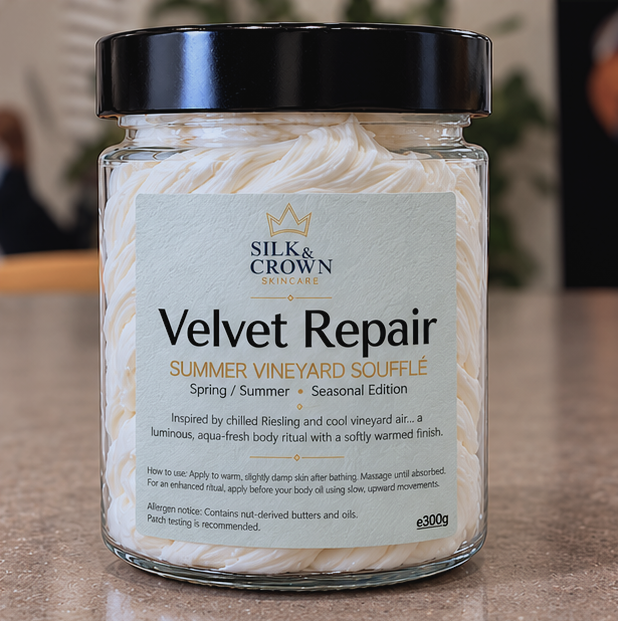
Body Butter
Designed to deeply hydrate, soften texture, support elasticity, and improve the appearance of uneven tone, stretch marks, and scar-prone areas — this is care for skin that needs consistency, nourishment, and time.
Having compassion for the woman who didn’t know
I think this is where my relationship with former versions of myself has changed most.
There are things I wish she had known. There are moments I wish she had protected herself earlier, and times when I wish she had understood that being loving did not require making herself endlessly available to another person’s needs.
But I can wish that for her without despising her for not knowing it.
And perhaps there is something quite important in that, because self-love cannot only be reserved for the woman we have eventually managed to become. It cannot only belong to the version of us with better boundaries, greater discernment and all this hard-earned wisdom. Surely some of that love has to travel backwards too, towards the woman who was doing the best she could with an understanding of herself that was still incomplete.
There are lessons we can be told repeatedly and still not really know until something in our own lives makes them real. That may be frustrating when we look backwards, because hindsight gives everything such extraordinary clarity, but perhaps we need to remember that the clarity itself was part of what the experience gave us.
These days, I think sovereignty looks much quieter than I once imagined it would.
I don’t think we necessarily wake up one morning feeling completely healed and suddenly announce that we are choosing ourselves. More often, we begin to notice over time that some of the things we once did no longer make sense to us. We don’t feel the same compulsion to explain ourselves until we are exhausted, or to keep offering more because what we have already given wasn’t appreciated. We become more discerning about where our tenderness goes, not because we have become less tender, but because we finally understand that our tenderness has to include us too.
And maybe that is why I no longer want to look at every past version of myself and say, You abandoned yourself.
There are times when something much more compassionate, and perhaps much more truthful, is available to me.
You didn’t know yet.
I think there is enormous grace in allowing ourselves that distinction. It doesn’t deny what happened, excuse the choices of other people or pretend there aren’t things we might do differently if we could live those years again. It simply recognises that the woman looking backwards possesses knowledge that the woman living through it did not.
And once we know ourselves differently, we tend to choose differently too. Not necessarily through grand declarations or by becoming so guarded that nobody can reach us, but through the accumulation of quieter choices in which we begin to understand what is precious enough to protect while still remaining soft enough to love.
Perhaps coming home to ourselves is something like that. We learn where we end and other people begin, we learn that generosity does not require depletion and that love does not require disappearance, and somewhere along the way we become better at making room for ourselves within the same life in which we have always made so much room for everybody else.
Not because the woman we were failed us.
She simply hadn’t learned yet what she would eventually teach us.
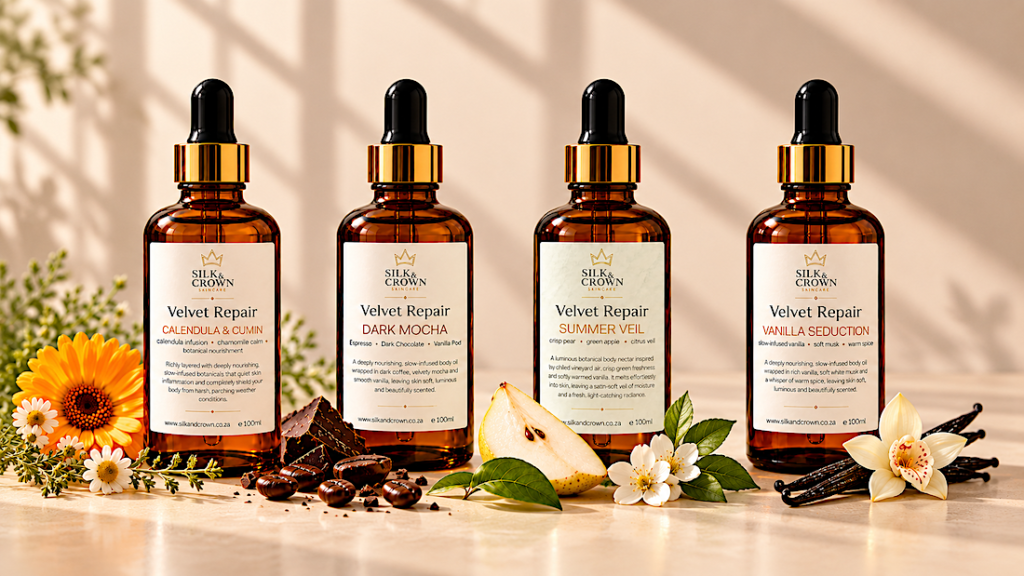
BODY OILS
Rich botanical oils and slow infusions created to replenish moisture, soften the skin and leave it with a luminous, velvety finish. Explore distinctive scent rituals designed for everyday nourishment and glow.