
When I began creating Velvet Repair, fragrance was not the first question I asked.
Which may sound strange, because scent is often one of the first things people notice about a body butter. It is immediate. It creates emotion. It can turn an ordinary evening routine into something that feels indulgent and beautifully considered.
But Velvet Repair did not begin with the question, What should this smell like?
It began with a much less glamorous question:
What does depleted, sensitive or changing skin actually need—and what kind of product will make someone want to meet that need consistently?
That distinction shaped everything that followed.
Velvet Repair began as a response
Velvet Repair was not initially conceived as a luxurious product looking for a purpose. It emerged in response to skin that needed more than a pleasant layer of oil and fragrance.
I was thinking about skin that felt persistently dry, uncomfortable or depleted. Skin experiencing changes in texture. Skin that needed support after periods of neglect or irritation. And, increasingly, the changing needs of more mature skin, which does not always behave as it did ten or twenty years ago—no matter how politely we ask it to.
The formulation therefore had to begin with function.
I wanted to create something rich enough to help reduce moisture loss and support the skin barrier, but still comfortable enough to use regularly. It needed to leave the skin feeling nourished and protected without making the person wearing it feel as though they had been glazed for display.
Because a product can contain the most beautiful oils and butters in the world, but if using it feels like a chore, it is going to sit in the cupboard looking very expensive and accomplishing absolutely nothing.
Texture determines whether care becomes a ritual
Texture is sometimes discussed as though it is merely a cosmetic preference: whipped or dense, silky or creamy, light or rich.
But texture influences the entire relationship between a product and the person using it.
It determines how easily the product spreads, how it meets the skin, how much friction is created during application and how the skin feels afterwards. It affects whether you reach for the product willingly or only when your skin has become so dry that it is practically filing a formal complaint.
For Velvet Repair, I wanted a texture that felt substantial without being cumbersome.
The butter needed to soften on contact with the warmth of the skin and allow enough movement for it to be massaged across the body. It needed to feel protective, but not sit on top of the skin as a heavy, waxy coating. And while I wanted the richness of an anhydrous butter—a formulation made without water—I did not want the finish to feel excessively oily or uncomfortable.
Finding that balance took priority over creating an impressive fragrance.
This was especially important because Velvet Repair was never meant to be used only for special occasions. It was created for consistent care: after bathing, on slightly damp skin, and as part of the ordinary rhythm through which the skin is supported over time.
The texture had to make that consistency easier.
BODY BUTTERS & OILS
Rich, velvety body moisturisers created to soften dry, rough-feeling skin and support lasting nourishment. Explore fragrance-free and beautifully scented options for everyday moisture or more intensive body care.
A beautiful formula still has to survive real life
There is also a practical side to texture that becomes very obvious when you formulate slowly and work closely with the finished product.
Body butters live in the real world.
They encounter warm bathrooms, cold bedrooms, South African summers, Johannesburg winters and customers who may store them in places you could never have predicted. Natural butters soften and firm as temperatures change, which means achieving a luxurious texture is not simply about whipping everything until it looks pretty.
And yes, freshly whipped butter can look spectacular. It can also behave like it has its own private agenda once the weather changes.
Texture therefore became an ongoing conversation between the ingredients, the climate and the experience I wanted Velvet Repair to provide.
I paid attention to how it scooped from the jar, how quickly it softened between the hands, how it spread and how the skin felt hours later. I was interested not only in the first impression, but in the conditions the product helped create for the skin throughout the day.
That mattered more to me than producing something that smelled extraordinary but did not perform with the same level of care.
Fragrance came last—but it was never unimportant
Scent was considered only after the therapeutic purpose and texture had been established.
Not because fragrance does not matter. It matters enormously to the ritual and to the emotional experience of using a product. Scent can make us slow down. It can create familiarity, comfort and pleasure. It can become part of the memory of caring for ourselves.
But I did not want it to distract from what Velvet Repair was created to do.
The fragrance needed to enter as an invitation rather than take over the entire conversation.
This is also why an Essential, fragrance-free expression of Velvet Repair became so important. Some skin needs the quietest possible experience. Some people are sensitive to fragrance, while others simply prefer their skincare without scent. The integrity of the formulation could not depend upon fragrance being present.
The scented expressions could then offer something additional: personality, atmosphere and sensory pleasure built around a formula that already had a reason to exist.
In that sense, scent became the final layer—not the foundation.
Recommended products
-
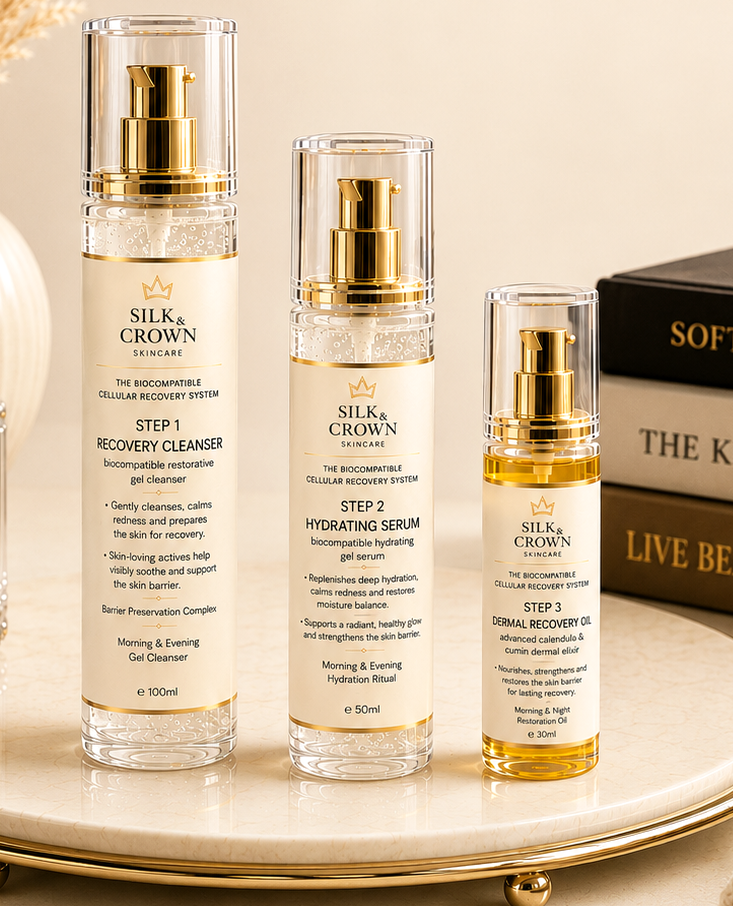
A CELLULAR RECOVERY & GLOW RITUAL: 3-step
Price range: R249,00 through R899,00 -
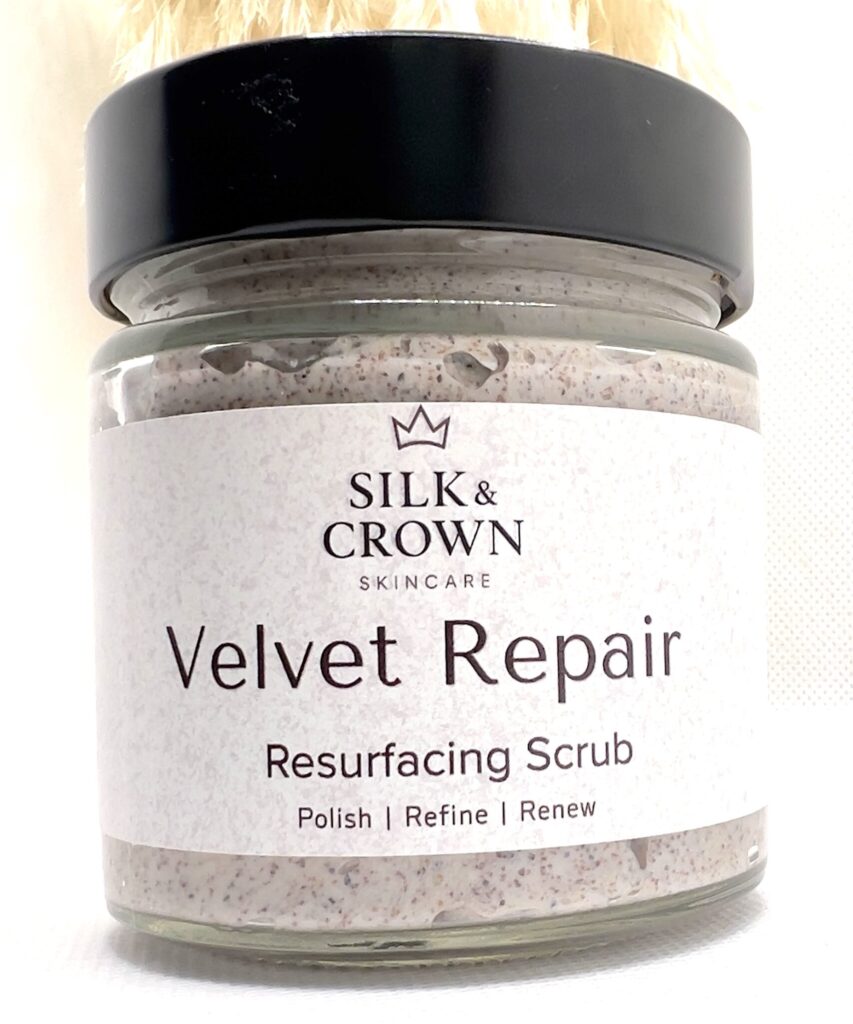
BODY SCRUB – RESURFACING & POLISH
Price range: R289,00 through R419,00 -
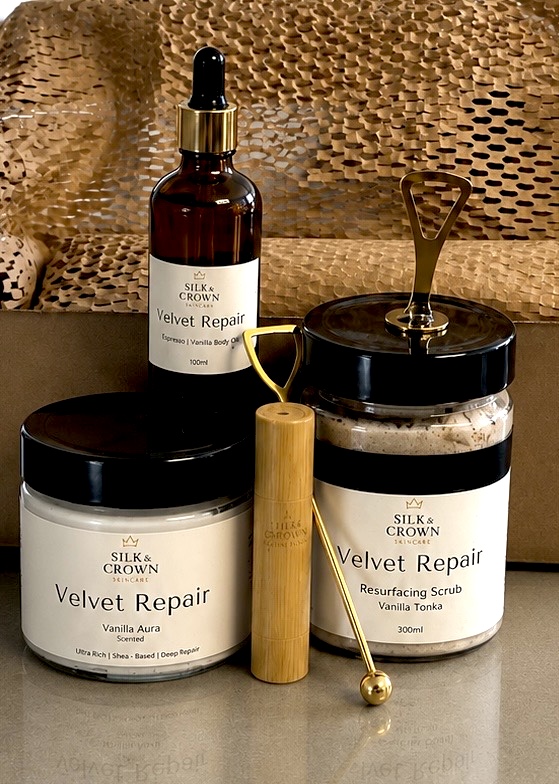
VELVET REPAIR: Woman’s Month Edition
Original price was: R1 682,00.R1 098,00Current price is: R1 098,00.
What mattered most was how the product met the skin
Velvet Repair was not designed simply to impress at first glance.
It was designed to respond.
Its texture had to communicate care before fragrance had the opportunity to create desire. It had to feel considered in the hands and comfortable on the skin. Most importantly, it had to support a ritual people could return to consistently—not because they had been persuaded by a beautiful scent, but because their skin recognised the difference.
This remains central to how I think about formulation.
A skincare product should, of course, be pleasurable to use. I have no interest in removing beauty, indulgence or sensuality from the experience. But those elements should be carrying something of substance.
Otherwise, we have created a lovely-smelling ornament for the bathroom.
And my bathroom already has enough objects standing around looking beautiful while contributing very little.
For Velvet Repair, texture mattered more than scent because texture was part of its function. It was the point at which the formulation met the body, where intention became experience and where skincare had the opportunity to become a consistent ritual.
The scent could invite you in.
But the way the product cared for the skin had to give you a reason to return.
Notes & Rituals