What the research actually says about body lotion, phthalates and petrolatum — and why skincare headlines deserve a second look.
Every now and then, I come across a skincare post that makes me stop scrolling.
Not necessarily because I believe it. And not necessarily because I don’t.
Sometimes I stop because the claim is alarming enough that I think: Wait. Is that actually what the research says?
This was one of those times.
The headline was essentially this:
“New study links everyday body lotion to an 80% spike in hormone disruptors.”
And Vaseline was among the products being highlighted.
Now, hormone-disrupting chemicals in personal-care products are not something I think we should dismiss. There is legitimate research into phthalates, parabens and other chemicals to which we’re exposed through cosmetics, food packaging, household products and our wider environment.
So I wanted to know more.
But I also formulate skincare.
And perhaps because of that, I’ve become increasingly uncomfortable with the way we sometimes talk about ingredients online. A scientific paper gets reduced to a frightening headline, the headline gets repeated often enough to become “fact”, and before long an ingredient has been convicted of something the original researchers may never actually have concluded.
So I went looking for the study.
And what I found was considerably more nuanced than the headline.
BODY BUTTERS & OILS
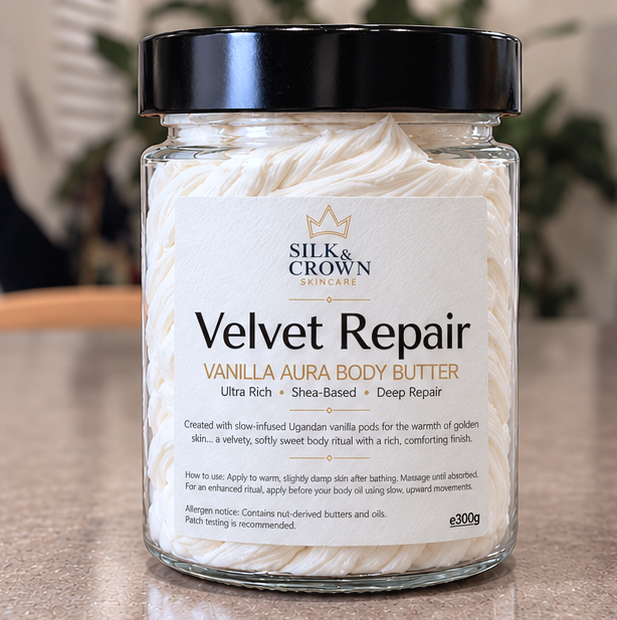
Rich, velvety body moisturisers created to soften dry, rough-feeling skin and support lasting nourishment. Explore fragrance-free and beautifully scented options for everyday moisture or more intensive body care.
First: yes, the study is real.
The research was published in Environmental Health Perspectives in September 2024 and looked at the relationship between skincare-product use and urinary concentrations of phthalates and phthalate replacements in young children.
The researchers studied children between the ages of four and eight. Caregivers reported which skincare products had been used on the children during the previous 24 hours, and researchers analysed urine samples from 630 children for 16 metabolites of phthalates and phthalate replacements.
That’s important research.
Phthalates are a legitimate area of concern in environmental-health research, and the researchers themselves describe them as endocrine-disrupting chemicals.
But here is where reading beyond the headline becomes important.
The researchers weren’t conducting a Vaseline experiment.
They did not take a group of people, apply Vaseline Petroleum Jelly to their skin, measure their hormone-disrupting chemicals before and afterwards, discover an 80% increase and conclude:
“Vaseline causes an 80% spike in hormone disruptors.”
That isn’t what happened.
Instead, this was an observational study looking at associations between reported use of different categories of skincare products and concentrations of metabolites found in urine.
Those product categories included lotions, oils, ointments, sunscreen, soaps, shampoos, conditioners, hair products and several others.
That distinction may sound small.
Scientifically, it is enormous.
Because finding that people who use a category of products have higher concentrations of a particular metabolite does not automatically identify which ingredient caused it.
And it certainly doesn’t automatically establish that petrolatum itself is an endocrine disruptor.
And then there’s that frightening percentage.
This is where I became particularly cautious about the headline.
In the actual published results, lotion use was associated with 1.17-fold greater concentrations of mono-benzyl phthalate (MBzP).
In ordinary language, that’s approximately 17% higher — not a universal 80% increase in “hormone disruptors.”
And the results weren’t even uniform across product categories.
One of the largest associations was actually found with oils: oil use was associated with 2.86-fold greater concentrations of monoethyl phthalate (MEP), alongside increases in some other metabolites. The authors noted that the oils reported in this group were primarily hair oils.
Associations also differed according to factors including race/ethnic identity and sex assigned at birth.
In other words, the actual study is complicated.
Which is exactly what good research often is.
“Body lotion causes an 80% spike in hormone disruptors” is considerably easier to put on a social-media graphic.
It just isn’t an accurate summary of what this particular study established.
So… is Vaseline a hormone disruptor?
This is the question I really wanted answered.
Because Vaseline Petroleum Jelly is predominantly petrolatum.
And if we’re going to move from:
“Some skincare-product use was associated with higher concentrations of certain phthalate metabolites”
to:
“Vaseline is a hormone disruptor,”
then we need evidence demonstrating the latter.
This study doesn’t provide it.
It did not isolate petrolatum as the cause of the urinary metabolites.
It did not establish an endocrine-disrupting mechanism for petrolatum.
It did not establish that applying Vaseline caused an 80% increase in endocrine-disrupting chemicals.
And this matters because association and causation are not interchangeable.
The researchers themselves acknowledge that skincare isn’t our only possible source of exposure to these compounds. Phthalates and related chemicals can also be encountered through food and beverage packaging, household dust, medications and other environmental sources.
None of this means we should stop investigating what’s inside the products we put on our bodies.
Quite the opposite.
It means we need to ask better questions.
Petrolatum has actually been studied separately.
And this is where my little research rabbit hole became even more interesting.
There is decades-old human research specifically investigating petrolatum and the skin barrier.
A clinical study published in the Journal of Allergy and Clinical Immunology examined the molecular and structural effects of petrolatum on human skin.
Researchers studied 36 healthy participants and 13 people with moderate atopic dermatitis.
They found that petrolatum did considerably more than simply sit on the surface of the skin.
Its application increased expression of important epidermal differentiation/barrier markers, including filaggrin and loricrin, increased stratum-corneum thickness and affected antimicrobial and innate immune responses.
The researchers concluded that petrolatum meaningfully modulated measures associated with epidermal differentiation and the skin barrier.
Now, does that mean petrolatum is perfect?
No.
Does it mean every petroleum-derived ingredient is wonderful?
Also no.
But it does demonstrate why I have a problem with deciding whether an ingredient is “good” or “toxic” according to the emotional response created by its name.
Because “petroleum-derived” isn’t a toxicology result.
This is something I think we need to talk about much more in skincare.
We have developed an interesting vocabulary online where certain words have almost become evidence in themselves.
Natural. Clean. Chemical. Synthetic. Petroleum-derived. Toxic. Hormone disrupting.
But those words don’t all mean the same thing.
Something being natural doesn’t automatically establish its safety.
Something being synthetic doesn’t automatically establish harm.
Something being petroleum-derived doesn’t automatically establish endocrine disruption.
And conversely, something being botanical doesn’t exempt it from questions about sensitisation, concentration, formulation or toxicology.
The actual evidence still matters.
And I say this as someone who formulates botanical-rich skincare.
This is perhaps the most important part for me.
It would actually be commercially convenient for someone like me to tell you that petrolatum is terrible.
I work extensively with botanical oils, butters, infusions and other skin-supportive ingredients. It would be very easy marketing to create a villain and then position what I formulate as the virtuous alternative.
But I don’t think that’s responsible skincare education.
I don’t need Vaseline to be dangerous for me to explain why I formulate differently.
Those are two completely separate conversations.
There are legitimate reasons why one formulator may choose particular plant lipids, humectants, emollients, occlusives or barrier-supportive ingredients over others.
There are equally legitimate reasons why dermatology has relied on petrolatum for generations.
Both things can be true.
The bigger issue here isn’t actually Vaseline.
For me, it’s what happens to science once it reaches social media.
A study can be completely legitimate.
A health concern can be legitimate.
The researchers can have done careful, valuable work.
And the viral interpretation of that research can still be misleading.
That’s an important distinction because misinformation doesn’t always begin with fake science.
Sometimes it begins with real science stripped of its context.
An association becomes causation.
A product category becomes a specific brand.
A measured metabolite becomes “toxins.”
A complicated statistical result becomes “80% more hormone disruptors.”
And suddenly we’re frightened of something the researchers themselves never actually concluded was responsible.
So what should we take from the research?
We absolutely should be interested in cumulative exposure to potentially endocrine-active substances.
We should care about what is in products that are used repeatedly and left on our skin.
We should continue demanding good ingredient disclosure, good manufacturing practices, appropriate regulation and better research.
And formulators should be willing to interrogate the ingredients we choose rather than hiding behind words like “natural” or “clean.”
But consumers also deserve something else:
Context.
Before throwing away a product because of an alarming headline, find the study if you can.
Ask what was actually measured.
Ask who was studied.
Ask whether the researchers found an association or demonstrated causation.
Ask whether the specific ingredient being blamed was actually tested.
And perhaps most importantly, ask:
Did the researchers themselves reach the conclusion I’m being shown on social media?
Sometimes they did.
And sometimes, as in this case, the answer is considerably more complicated.
There is enough genuinely fascinating science around skin for us not to need fear to make it interesting.
References & Further Reading
Bloom MS, Clark JM, Pearce JL, et al. (2024). Impact of Skin Care Products on Phthalates and Phthalate Replacements in Children: the ECHO-FGS. Environmental Health Perspectives, 132(9), 097001. DOI: 10.1289/EHP13937. PMID: 39230332.
Czarnowicki T, Malajian D, Khattri S, et al. (2016). Petrolatum: Barrier repair and antimicrobial responses underlying this “inert” moisturizer. Journal of Allergy and Clinical Immunology, 137(4), 1091–1102.e7. DOI: 10.1016/j.jaci.2015.08.013. PMID: 26431582.
This article is for skincare education and discussion and should not be interpreted as individual medical advice.
Featured products
-
A CELLULAR RECOVERY & GLOW RITUAL: 3-step
Price range: R249,00 through R899,00 -
A CELLULAR RECOVERY & NOURISH RITUAL: 4-step
Price range: R199,00 through R1 078,00 -
A SCULPT & LIFT™ RITUAL — 3-Step Evening
Price range: R249,00 through R1 329,00 -
BODY BUTTER – VANILLA AURA
Price range: R197,00 through R519,00 -
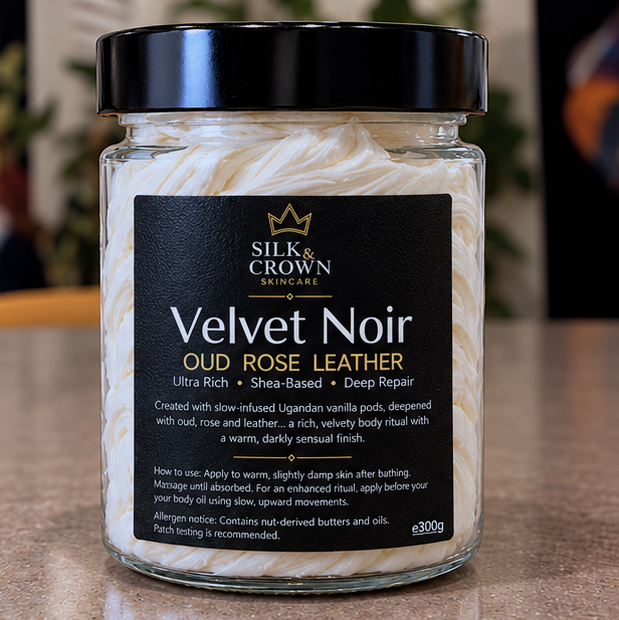
BODY BUTTER | OUD, ROSE & LEATHER
R579,00